
A benefit qualifies as a working condition fringe under IRC §132(d) when the employee could have deducted its cost under §162 or §167 had they paid for it themselves. That test, not the benefit's label or intent, decides the outcome. Substantiation requirements under section 274(d) can defeat the exclusion even when the underlying expense would otherwise qualify, so documentation matters as much as the legal theory.
TL;DR:
- The benefit must be something the employee could deduct as a business expense under sections 162 or 167 for its exclusion to apply.
- Proper documentation and substantiation under section 274(d) are crucial; benefits lacking proof of business use are taxable.
- Common qualifying benefits include employer-provided cell phones with a business purpose, job-related education, and certain nonpersonal-use vehicles.
- Recordkeeping should include contemporaneous logs, clear valuation methods, and timely retention of supporting documents for at least three years.
- Benefits provided through non-structured allowances or without proper policies risk reclassification as taxable wages, especially for S-corp owner-employees.
Table of Contents
- Definition and legal basis: IRC §132(d), Reg. §1.132-5, and Publication 15-B
- Common qualifying examples employers actually encounter
- Substantiation, valuation, and recordkeeping employers must maintain
- Exclusions and overlaps with other fringe benefit categories
- Payroll and reporting: getting W-2 and 1099 treatment right
- Practical compliance checklist and policy design
- A practitioner's view on where fringe benefit claims go wrong
- Deciding between in-house compliance and professional help
- How specialized tax advisory services support fringe benefit compliance
- Sources
- FAQ
Definition and legal basis: IRC §132(d), Reg. §1.132-5, and Publication 15-B
Section 132(d) of the tax code excludes from an employee's wages any property or service that the employer provides, to the extent the employee would have been entitled to a business deduction under §162 (ordinary and necessary business expenses) or §167 (depreciation) if he or she had purchased it directly. The logic is straightforward once you separate it from other fringe categories: if a self-employed person doing the same job could deduct the cost, an employer can generally provide the equivalent item or service tax-free to an employee.
Treasury Regulation 26 CFR §1.132-5 fills in the mechanics. It confirms the deduction test, then adds valuation rules for situations that do not fit neatly into a simple expense comparison, including employer-provided aircraft, security-related transportation, and qualified nonpersonal-use vehicles. The regulation also makes clear that substantiation is not optional. An expense that would pass the §162 test on paper still fails the exclusion if the employer cannot document business purpose and business use the way section 274(d) requires for listed property.
IRS Publication 15-B (2026) translates the statute and regs into employer-facing language. It walks through recurring scenarios, cell phones, job-related training, and similar items, and repeats a consistent warning: personal use must be tracked and included in wages unless the employer can show the benefit was used, or substantiated, for business purposes.
A few points employers and preparers often get wrong:
- The test looks at what the employee could deduct, not what the employer deducts on its own return.
- "Would have been deductible" is hypothetical: the employee never actually pays or claims the deduction, but the benefit must meet the same standard that would apply if they did.
- Substantiation under section 274(d) applies to listed property (cell phones, vehicles, and similar items) regardless of how clean the business case looks.
- Section 167 depreciation deductions matter for property with a useful life beyond the current year, which is why equipment and vehicles get special valuation treatment under the regs.
Who counts as an "employee" for section 132 purposes is broader than a typical payroll list. The regulations extend certain fringe benefit provisions to partners, sole proprietors, independent contractors performing services, and, in limited circumstances, directors. However, the working condition fringe exclusion itself is generally tied to common-law employees and others treated as employees for these purposes. Preparers working with multi-entity structures should confirm entity type before assuming a shareholder-employee automatically qualifies the same way a W-2 employee does.
Common qualifying examples employers actually encounter
Most working condition fringe questions come down to a handful of recurring fact patterns. Each has its own documentation trigger.
- Employer-provided cell phones. A phone provided primarily for business reasons is excludable in full when the employer can show a legitimate business purpose, according to Publication 15-B. Mixed personal and business use does not automatically create taxable income, but the employer should still document the business rationale for providing the phone in the first place, since IRS guidance on this issue treats cell phones as listed property subject to substantiation.
- Job-related education and training. Costs that maintain or improve skills needed in the employee's current job are excludable. Education that qualifies the employee for a new trade or business, or that meets minimum requirements for their present job, does not qualify, regardless of how job-related it feels.
- Product testing arrangements. Consumer goods given to employees for evaluation and feedback, before the product's release to the public, can qualify as a working condition fringe when the arrangement is structured for genuine business testing rather than as disguised compensation. The employer typically needs the product returned or otherwise accounted for, and the testing period should be reasonably relative to the product's typical use cycle.
- Qualified nonpersonal-use vehicles. Treasury Regulation §1.132-5 sets a narrow standard here. Vehicles that by their design are unlikely to be used more than minimally for personal purposes, marked law enforcement vehicles, unmarked vehicles used by law enforcement officers, and certain heavy equipment or specialty vehicles, may be excludable in full. Ordinary passenger cars and most trucks rarely meet this standard, even when an employer restricts their use by policy.
Substantiation, valuation, and recordkeeping employers must maintain
The exclusion is only as strong as the paperwork behind it. Section 274(d) imposes strict substantiation requirements on listed property, and cell phones, computers, and vehicles all fall into that category. For each item, the IRS generally expects the employer or employee to be able to show the amount of the expense, the time and place of use, and the business purpose.
Key recordkeeping practices include:
- Maintaining contemporaneous logs or itemized statements for listed property rather than reconstructing usage after the fact.
- Distinguishing accountable plan reimbursements, where employees substantiate expenses and return any excess, from taxable flat allowances that get added to wages regardless of actual spending.
- Applying consistent valuation methods for special cases: personal use of an employer-provided cell phone is typically valued based on the pro rata share of usage when full business-use substantiation is not available, aircraft allocations follow the specific valuation formulas in the regs, and security-related transportation has its own carve-out.
- Retaining substantiation records for at least the statute of limitations period on the relevant tax year, generally three years from filing, longer where underreporting is a concern.
Pro Tip: Build substantiation into the benefit itself, a required monthly attestation or an itemized carrier statement, rather than asking employees to reconstruct usage during an audit two years later.
An accountable plan is the operational tool that ties this together. Under an accountable plan, the employer requires a business connection for the expense, adequate substantiation within a reasonable period, and the return of any amount that exceeds substantiated expenses. Benefits run through a properly designed accountable plan are far less likely to be recharacterized as wages than flat reimbursements or unstructured allowances.

Exclusions and overlaps with other fringe benefit categories
Working condition fringes are frequently confused with other exclusions in the same part of the code, and the confusion creates real reporting mistakes.
Commuter parking and transit passes are governed by §132(f), the qualified transportation fringe rules, not §132(d). Qualified transportation benefits carry their own monthly dollar limits and their own substantiation standard, and treating a parking benefit as a working condition fringe simply because it relates to commuting for work is a category error that Publication 15-B specifically warns against.
De minimis fringes follow a different rationale entirely. Where the working condition fringe exclusion depends on the hypothetical deductibility of the expense, the de minimis exclusion depends on the value being so small and the frequency so occasional that accounting for it would be administratively impractical, a distinction practitioners emphasize when comparing the two categories. A benefit provided every pay period, even if individually modest, tends to fail the de minimis test regardless of dollar amount. Our guide to the de minimis safe harbor walks through that threshold in more detail.
Other common overlaps and mistakes:
- Tuition reduction programs are governed by §127 and §117(d), not §132(d), and carry their own dollar caps and eligibility rules.
- Dependent care assistance falls under §129, with its own exclusion limit separate from the working condition fringe framework.
- Meals and lodging provided for the employer's convenience are handled under §119, which has its own "convenience of the employer" and "on the business premises" tests.
- Employers sometimes lump all of these together under a single "fringe benefits" policy without distinguishing the statutory basis, which is exactly what creates exposure when an examiner asks which code section supports each line item.
Payroll and reporting: getting W-2 and 1099 treatment right
Correct payroll treatment depends on getting the exclusion analysis right before the pay period closes, not after.
- Determine excludability first. If the benefit meets the §132(d) test and is properly substantiated, no amount goes on Form W-2. If it fails the test, or if personal use exceeds what the employer can substantiate as business use, the taxable value is added to wages and subject to income tax withholding, Social Security, and Medicare.
- Separate employee and nonemployee treatment. Employees receive taxable fringe benefit value on Form W-2. Independent contractors and other nonemployees who receive comparable benefits generally have that value reflected on Form 1099-NEC or 1099-MISC as appropriate, since the W-2 wage-inclusion mechanism does not apply to them.
- Apply a consistent valuation method for mixed-use items. When an employer cannot substantiate exclusive business use of a cell phone or vehicle, the personal-use portion is valued under the applicable method in the regs and included in wages for the period in which the benefit was provided.
- Build the benefit into payroll system setup, not as a year-end adjustment. Assign a specific earnings code for taxable fringe value so it flows correctly into W-2 boxes and employment tax calculations, and flag benefits that are fully excludable so they never touch the wage base.
S-corp owner-employees add another layer, since certain fringe benefits that are tax-free to a regular employee are treated differently for a more-than-2% shareholder. Our post on S-corp fringe benefit reporting covers the W-2 mechanics specific to that ownership structure.
Practical compliance checklist and policy design
A written policy converts the statutory test into something payroll and HR can actually apply consistently.
An accountable plan should specify:
- A clear business connection requirement tied to the employee's actual job duties, not a blanket company-wide assumption.
- A substantiation deadline, typically within a reasonable period after the expense is incurred, requiring logs, receipts, or itemized statements.
- A requirement to return any excess reimbursement or allowance within a reasonable period, closing the loop that keeps the arrangement from becoming a disguised salary supplement.
Sample policy language that holds up under review tends to require an exclusive-business-use attestation for items like cell phones, an itemized carrier statement when mixed use is possible, and a manager sign-off for product testing arrangements or vehicle assignments claimed as qualified nonpersonal-use vehicles.
On the HR and payroll side, integration means assigning dedicated earnings codes for taxable versus excludable fringe items, training payroll staff to recognize listed property triggers, and setting a document retention schedule that matches the relevant statute of limitations.
Pro Tip: Run an annual internal review of every recurring fringe benefit against its statutory basis, §132(d), §132(f), §129, §119, whichever applies, rather than assuming last year's classification still holds after a policy change or new hire type.
Red flags worth a second look include a benefit that has grown in value or frequency since it was first classified, a benefit provided to owners or officers but not documented the same way for other employees, and any arrangement where the "business purpose" description reads more like a job perk than a deduction rationale.
A practitioner's view on where fringe benefit claims go wrong
A tax professional experienced with multi-entity business owners notes that fringe benefit classification often gets tangled up with S-corp payroll and accountable plan design. A recurring pattern: a company treats a benefit as excludable because it feels business-related, then cannot produce the substantiation an examiner asks for two years later. The fix is rarely retroactive. It comes from building the documentation trigger into the benefit at the point it is granted, not after the fact.
Advisory work in this area centers on mapping fringe benefits to the correct code section before payroll runs, drafting accountable plan language that matches how the business actually operates, and setting up the earnings codes and retention practices that make an eventual audit a non-event rather than a scramble.
— Melissa
Deciding between in-house compliance and professional help
Simple fact patterns, a single cell phone policy, one training reimbursement program, are usually manageable in-house with a clear written policy and consistent recordkeeping. The calculus changes with multi-state payroll, employer-provided aircraft, large-scale product testing programs, or any arrangement involving S-corp owner-employees where the fringe benefit rules interact with reasonable compensation questions.
The cost of getting professional structuring help is generally small next to the cost of a reclassified benefit across multiple tax years, plus penalties and interest. Before contacting an advisor, gather your current fringe benefit policy documents, a list of benefits provided in the last 12 months, and payroll codes currently in use. That preparation turns the first conversation into a diagnostic rather than a fact-finding exercise.
How specialized tax advisory services support fringe benefit compliance
Getting the working condition fringe exclusion right is less about knowing the statute and more about building payroll and documentation systems that hold up when someone asks for proof. Some tax advisory firms work with business owners and multi-entity operators to turn that statutory test into a system rather than a guess.
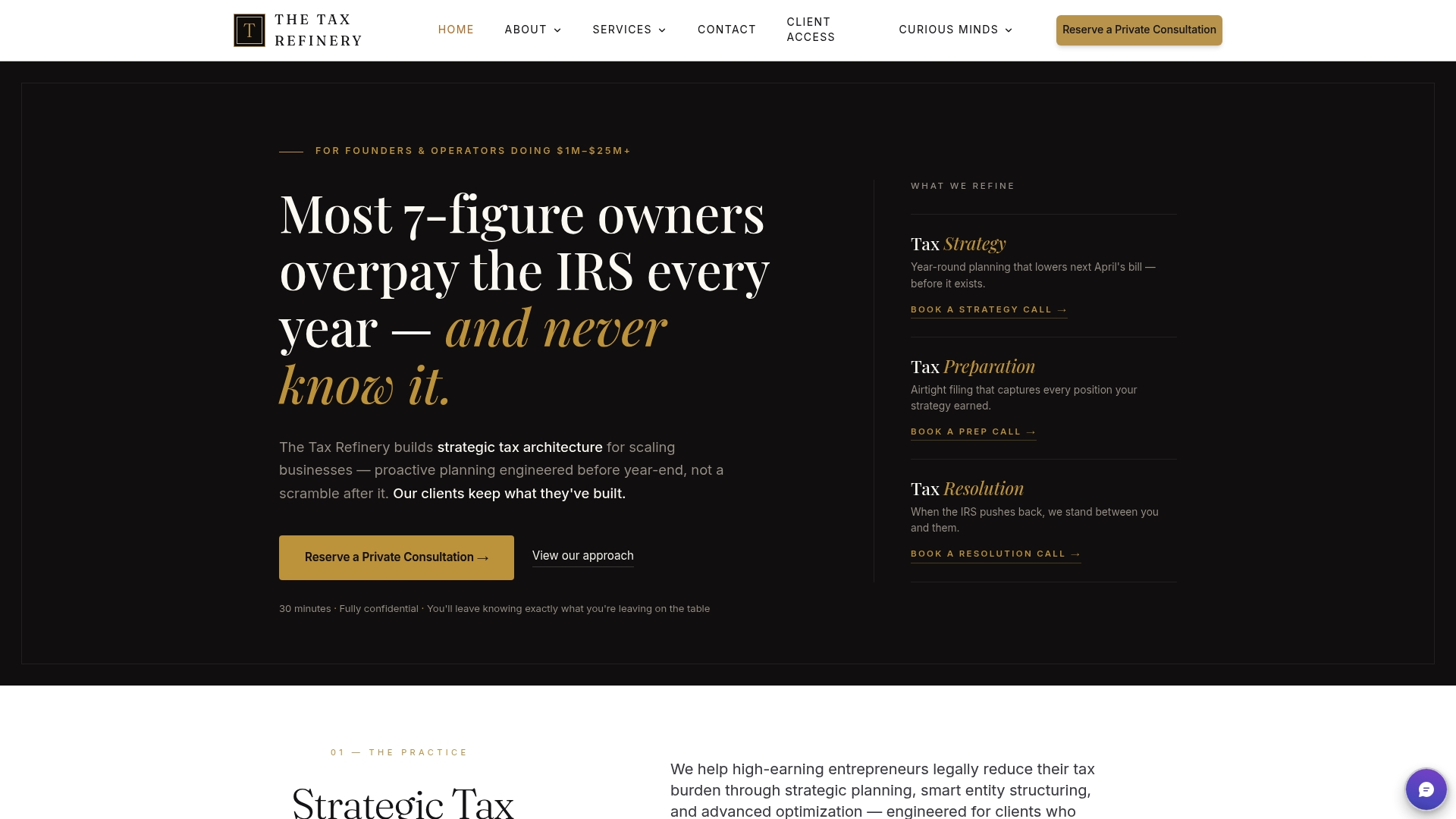
Relevant services for this specific problem include:
- Monthly Tax Advisory, priced at an annual subscription rate, which includes ongoing accountable plan guidance and payroll mapping rather than a once-a-year review.
- Quarterly Tax Strategy Sessions, priced at an annual subscription rate, for owners who want structured check-ins without a full monthly engagement.
- S-Corp Tax Strategy Accelerator, a one-time engagement priced under $1,000, built specifically for S-corp owner-employees navigating fringe benefit and reasonable compensation questions together.
Such engagements typically produce deliverables like policy templates for accountable plans, payroll earnings codes mapped to the correct exclusion category, and a documentation checklist to assist ongoing compliance. If your current fringe benefit policy was written once and never revisited, that is usually the first sign it needs a second look. You can review the full service lineup or start with the fee schedule for standard preparation work.
Sources
- 26 U.S.C. § 132 - Certain fringe benefits
- Publication 15-B (2026), Employer's Tax Guide to Fringe Benefits
FAQ
What are examples of fringe benefits?
Fringe benefits include working condition fringes like job-related training and business-use cell phones, qualified transportation benefits like transit passes, de minimis items like occasional small gifts, and other statutory exclusions such as dependent care assistance and employer-provided meals under specific conditions. Each category follows its own code section and its own eligibility test, as Publication 15-B outlines.
What are fringe work benefits?
"Fringe work benefits" generally refers to the same category as fringe benefits: noncash compensation an employer provides in addition to wages, ranging from health coverage to equipment and training. Whether a specific item is taxable or excludable depends on which code section governs it, not on how the benefit is labeled internally.
What is considered an employee fringe benefit?
An employee fringe benefit is any property or service an employer provides to an employee beyond regular wages, and it is taxable unless a specific code section excludes it. Working condition fringes are excluded when the item would have been deductible under §162 or §167 had the employee paid for it directly and substantiation requirements are met.
What fringe benefits are excluded from income?
Excluded fringe benefits include working condition fringes that meet the deductibility test, qualified transportation fringes up to their statutory monthly limits, de minimis fringes of minimal value and frequency, and other specific exclusions like certain tuition reduction and dependent care assistance programs. The applicable limits and conditions for each category appear in IRS Publication 15-B.